
3rd Sunday of Lent, Year A – Homily

3rd Sunday of Lent, Year A
Exodus 17:3-7
Psalm 95:1-2, 6-7, 8-9
Romans 5:1-2, 5-8
John 4:5-42
March 19, 2017

The Israelites have just left slavery in Egypt.  You might think they would be very thankful for being set free yet they are grumbling.

Now, they do have a real concern.  They don’t have water to drink.  Water is necessary for life so stating their need would be appropriate but “grumbling” indicates a lack of trust.  They had previously said they needed food to eat and God provided the manna and the quail.  God had set them from the Egyptians.  Why did they not trust in God?

Moses cries out to God and God provided water in a way that only God can.  He told Moses, “Strike the rock, and the water will flow from it.”  There is no way for Moses to have done this on his own.  God provided for his people.

Now, jump a head a number of centuries and we find Jesus at Jacob’s well in Samaria.  He sees a Samaritan woman there and said to her “Give me a drink.”

She is surprised that He speaks to her.  She recognizes him as a Jew and she is a Samaritan and the two peoples didn’t get alone.  This was a centuries old conflict going back to the split between the northern and southern kingdoms of Israel.

Nonetheless, she continues the conversation with him.

Jesus then speaks to hear of “living water.”  She is taking his comments about water literally.  She says that Jesus doesn’t even have a bucket, there is no way He can give her water.  He says that whoever drinks the water that He will “give will never thirst.”

She still thinks He is speaking of literal water but she wants some.  How great it would be to never need to drink again.

Jesus then speaks to her about her “five husbands.”  This is what begins to get her to open her eyes to something more, something deeper in Jesus.

She says she knows “that the Messiah is coming” to which Jesus identifies himself as the Messiah she awaits.

She is not sure whether to believe him or not.  As disciples return, she goes into the town and tells people about Jesus.  She isn’t sure what is going on but Jesus has stirred something in heart that leads her to share with others what she has learned about Jesus.

This leads them to go and see Jesus for themselves and to invite him to stay with them.  Their belief in Jesus started because of what the Samaritan woman told them but, having listened to Jesus, they “began to believe in him because of his word” and they came to know “that this is truly the savior of the world.

Two questions.  First, how much do we know about Jesus? Secondly, do we share what we know?

Sometimes people think that once they are confirmed, they know everything, well maybe not everything, but they know what they need to know about Jesus.

However, when they are called to share our faith with others they will say they don’t know enough our faith to do that.

There’s a contradiction there, isn’t there?  If we know what we need to, then we must know enough to share.

If we don’t know enough to be comfortable in sharing our faith, then we need to put some effort into learning more.  I would say all of us, myself included need to put effort into learning more about our Catholic faith but that doesn’t mean we can’t share what we do know.

You see, at its core, sharing faith starts with about speaking of our experiences more so than sharing “knowledge.”  We need the knowledge but our sharing should begin with what our faith means to us.  Tell people what about our faith gets you to come to church.  What do you like about being here?

Evangelization means both sharing our faith with others and growing in our own faith.  The Samaritan woman does this as sh shared her personal experience of Jesus and that got the people to come.  May we have the courage to do the same.
Hope

For those of you who don’t know, I serve at St. Michael Church in Newark in Wayne County, New York, which is bordered on the north by Lake Ontario.  That means today (Wednesday, March 15, 2017) we have about 18 inches of the snow on the ground with 5-8 more inches forecasted for today and 1-3 inches tonight.  This started with the major storm that moved up the east coast yesterday but it continues with lake effect snow from Lake Ontario as the air mass has circled around.

With all this in mind, I want to offer a simple thought on hope.  Yesterday was miserable with the weather and it was forecasted to get worse during the night.  Many places were announcing last night cancellations for today.  I felt I would probably end up closing the office today but I did not want to make the decision last night because I like to think there is always hope.

Well, this morning I was outside shoveling to get to the church for daily Mass.  As I stood in 18 inches of snow, I decided to close the office and all parish events for the day are cancelled (the local sheriff’s office says no unnecessary travel till 5 a.m. tomorrow).

Does this mean there is no hope?  Only for the office to be open today.  With Jesus Christ as our savior and redeemer, there is always hope!  Even looking at Jesus dying on the Cross, what we see is hope because Jesus’ Crucifixion makes eternal life possible.  Jesus’ Resurrection shows us that there is more to life that what we see in this world.  For all who believe in Jesus as the way and the truth and the life there is always hope!

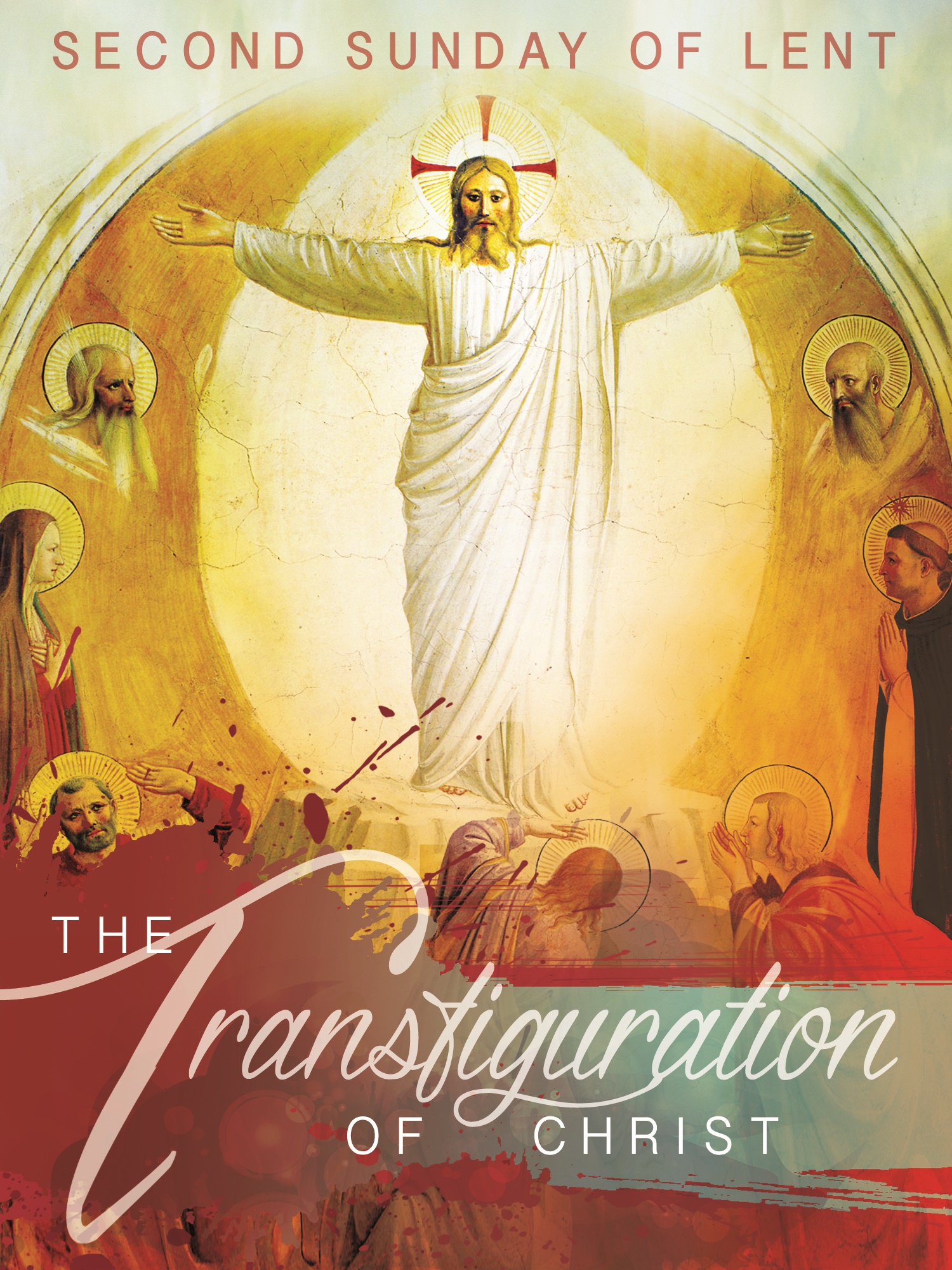
For now, look at the white snow and think of the fifth line of last Sunday’s Gospel when, in the Transfiguration, Jesus’ “clothes became white as light.”  That is an image of Jesus’ glory in Heaven.  At Baptism, we are dressed in white and at our funeral a white pall is placed upon our casket as a sign of our share in eternal life.  And so we have hope.

Peace,

Fr. Jeff

Judging the Circumstances

Today’s gospel begins,

Jesus said to his disciples:
“Be merciful, just as your Father is merciful.
“Stop judging and you will not be judged.
Stop condemning and you will not be condemned.”

The line “Be merciful, just as your Father is merciful” was the source of the motto for the Jubilee Year of Mercy that we just concluded in November 2016 on the Solemnity of Christ the King.  While the Jubilee Year of Mercy has ended, our own need to receive mercy and our call to show mercy to others never ends.

When I think about Jesus’ words “Stop judging and you will not be judged,” I think about how we might rush to judgment of others when we do not know all the circumstances.  If we do something wrong, don’t we want God and others to take the circumstances into account?  Then we need to realize we must never rush to judgment of others.

As I read today’s readings, I remembered a visit I had to the emergency room fifteen years ago.  I was the patient but not a “terrible” problem.  I had cut my left hand and it was just bad enough to need a couple of stitches.  I waited and waited in the room waiting for the doctor.  As I waited, I began to wonder how long it would take.  Yet, I was aware that the ER had three possible heart cases come in and one of them was my mother.  So I decided I could be patient waiting because I knew there was more going than just me.  If I hadn’t known the circumstances (with my mother as one of the patients), I would have become very frustrated.

Peace,

Fr. Jeff

Incidentally, my mother ended up not having heart issues.  She had COPD with Emphysema and was having a bad spell.  I was at her house working on stuff when she got bad so I called the ambulance.  You should have seen the look on the EMT’s face when he came in the door on a call for “difficult breathing” and I was standing there holding a bandage over my wrist.  I pointed him to my mother, saying I would be fine.  I just needed someone to bandage me so I could follow the ambulance in my car.

2nd Sunday of Lent, Year A – Homily

2nd Sunday of Lent, Year A
Genesis 12:1-4a
Psalm 33:4-5, 18-19, 20, 22
2 Timothy 1:8b-10
Matthew 17:1-9
March 12, 2017

In our responsorial psalm verse today we sang, “as we place our trust in you.”  We come here to place our trust in God is “upright” and “trustworthy” but sometimes we are not sure.  By that, I mean we are not sure what God wants us to do.

Abram, who will become known as Abraham, is the example of complete trust in the Lord.  “The Lord said to Abram:  Go forth from the land of your kinsfolk and from your father’s house to a land that I will show you.”

His father’s house is what was familiar to Abram.  He knew what to expect there.  God tells him to go to a land that He will show him.  He doesn’t even tell Abram where the land is.  Abram could have been afraid.  What is Abram’s response?  He “went as the LORD directed him.

Would you do the same?

I like to think that if I knew it was the Lord I would do it but I said “if”.  It’s not that I don’t trust God.  Rather, I have to admit that even as a priest, sometimes it can be hard to know what is God’s will versus my own desires or just pressure from others.

Sometimes it can be hard.  I try not to let any “hardship” discourage me.  For if we are doing God’s will we can remember Paul’s words to Timothy, “Bear your share of hardship for the gospel with the strength that comes from God.”  God doesn’t make everything easy but He will give us the strength we need to do whatever He asks of us.

It is here that I turn to the story of Jesus’ transfiguration.  In the gospels there are times when Jesus goes off to pray by himself and we don’t know anything about what happens then.  This time, as Jesus goes up on the high mountain, He takes Peter, James, and John with him.

On the mountain, the three disciples see something incredible.  They see Jesus transfigured, “his face shone like the sun and his clothes became white as light.”  That alone would be an incredible experience, to see Jesus as we will see him in Heaven.  Yet, there is more.  Moses and Elijah appear with Jesus.

Peter, amazed by what he sees, says, “Lord, it is good that we are here.”  Peter is right.  They have been given an incredible blessing to see Jesus in his glory, a new step in their faith.  Clearly, this must strengthen faith and trust in Jesus.  Moses’ presence signifies that Jesus is the fulfillment of the Law.  Elijah’s presence signifies that Jesus is the fulfillment of what the prophets foretold.  Point being – We can believe in Jesus.

Peter is so amazed at what he sees that he offers to make three tents.  He wants the experience to last.

Then, they hear God’s voice, “This is my beloved Son, with whom I am well pleased; listen to him.”

We can place our trust in Jesus.  Peter, James, and John are blessed by their experience and we are blessed that their experience is written down that we know of it.

It is a blessing for us to being able to reflect on this scene but how can we experience God’s presence today?

We experience God’s presence in listening to his words as recorded in the Bible.  That’s why we read from the Bible at every Mass (and some of our prayers come from scripture passages).  We can also read the Bible on our own.  We can read as a story.  We can read as God’s teaching.  We can read it as prayer in Lectio Divino.

We receive Jesus himself in the Eucharist.  It is not simply bread and wine at Communion.  It is the Body and Blood of Jesus.

We can also experience God in private prayer.  Here I want to turn to what we call “Contemplative Prayer.”  As soon as we hear this phrase, we might think of cloistered nuns and monks in monastery who spend their whole day in prayer.  That can seem impossible for us but contemplative prayer does not require us to be nuns or monks.

In thinking about private prayer, we might tend to think of prayers we say like the Rosary, St. Michael’s Chaplet, the Divine Mercy Chaplet, or other devotions.  Our petitions of need that we offer to God are also prayer.  These are important prayers and they can certainly help us be aware of God’s presence in our lives.

All these types of prayer can involve us using lots of words.  Contemplative Prayer is not about words.  It is about seeking simply to be aware of God’s presence.  In fact contemplative prayer (more specifically centering prayer) calls us to let go of all the thoughts that come into our hearts.

The first time I heard that my response was to think it impossible.  I have so many thoughts going through my head that I can’t imagine a time without thoughts but I gave it a try.

I have to admit it isn’t easy but when I am successful (by God’s grace) it is awesome.  It is a blessing to be able to let go of all the thoughts and simply be aware that God is with me.

The form of contemplative prayer that I was taught calls for 20 minutes a day, twice a day.  I don’t do that often.  Actually, lately, I don’t get to it much at all but when I do, I am blessed.

Now you don’t start out at twenty minutes, twice a day.  You might start with just five minutes and learn the process of getting yourself centered.  I can’t give you all the instructions here, partly because it would take too long, but also, honestly, because I don’t remember it all.  If you want to find out more, you can go to my own website (www.renewaloffaith.org) and look under the (contemplative/centering) prayer section or Google contemplative and/or centering prayer.

More simply, I encourage to just begin by including a couple of minutes of silence in your prayer.  You don’t have to do all the talking.  Just be still and let the Lord come to you.

1st Sunday of Lent, Year A – Homily

1st Sunday of Lent, Year A
Genesis 2:7-9, 3:1-7
Psalm 51:3-4, 5-6, 12-13, 17
Romans 5:12-19
Matthew 4:1-11
March 5, 2017

Today we hear the story of the “original sin.”  Adam and Eve were in the Garden and God had given them just one rule.  They were told not to eat of the fruit of one particular tree.  There were plenty of other trees so it didn’t seem like a big deal.  They had plenty they could eat.

Then out comes the serpent who is described as “the most cunning of all the animals.”  He wants them to disobey God but he knows they will not disobey God without some trickery.  So he uses his cunning to cast doubt on what God has said.

First, the serpent says, “Did God really tell you not to eat from any of the trees in the garden?”  He knows full well this is not what God had said and Eve knows that and responds accordingly but he whittles away at what God has said…  Next, he tries to get portray the one rule God has given them as selfish.  Why did God tell them not to eat from the tree?  Because, “God knows well that the moment you eat of it your eyes will be opened and you will be like gods who know what is good and what is evil.”

Sounds appealing and so Eve ate the fruit and got Adam to do the same.  Satan works the same way with us.  He will try to distort God’s word.  He will try to make it look like God has alternative motives.  Satan tries to make sin look good.

He does this to tempt us, to get us to sin.

Sometimes Satan’s cunning is too much for us and we sin.  Sometimes we are weak and are not always able to resist and we sin.  Resisting temptation is not easy but it is part of being human.

As a human, it was necessary for Jesus to face temptation.  So, right after his baptism, Jesus is “led by the Spirit into the desert to be tempted by the devil.”

He fasts for forty days and so he becomes hungry.  The tempter said, “If you are the Son of God, command that these stones become loaves of bread.”  This might not even seem like temptation.  Jesus hasn’t eaten for forty days.  It might seem perfectly reasonable for him to use his power to have bread to eat but Jesus knows he does not have this power for selfish reasons.  He knows God provides the word that truly feeds him.

Next, the devil tries to deceive Jesus by using scripture to tell Jesus He can throw himself down and God will save him.  Does scripture teach us to trust in God?  Absolutely, but, as Jesus says scripture also says, “You shall not put the Lord, your God to the test.”  We can fully trust in God but that doesn’t mean we can do whatever we want and expect God to rescue us from our own stupidity.

We probably aren’t literally going to throw ourselves off a parapet and expect God to catch us but are there times we rush blindly into something and then question God when things don’t go well.

The devil tries to tempt Jesus one more time but offering him all that physical things of this world if Jesus will just worship him.  To have everything…power, wealth…

Many, many people give into this type of temptation and put their whole lives into building up wealth and power for themselves.  Hopefully you don’t succumb your whole life to this but how many individual choices do you make for wealth and power that lead down the slippery slope away from Jesus?

Of course, Jesus is able to resist all temptation.  I say “of course” because He is the Son of God.  Jesus shows us that it is possible to resist temptation but we might feel it is impossible for us.

With God’s help, all things are possible but it is true that often we sin.  It started with the original sin of Adam and Eve.  As Paul writes, “Through one man sin entered the world, and through sin, death.”  Death here is the separation from God caused by our sin.

But there is hope.

God offers a gift following our sins.  It is “the gracious gift of the one man Jesus Christ.”  It is the gift that “brought acquittal.”  It is the “gift of justification”  “For just as through the disobedience of the one man, the many were made sinners, so, through the obedience of the one, the many will be made righteous.

The gift comes through Jesus’ death on the Cross.  The gift is freely given.  There is nothing we can do to earn this gift but we do need to accept it.  To accept it, we must confess our sins and resolve to sin no more.  We often fall short but we must keep trying and keep repenting.

How have you fallen into temptation?  What do you need to confess?

And so we cry out in our psalm, “Be merciful, O Lord, for we have sinned.”


Video of “Lenten Customs”

On Monday night I led a session on our Lenten customs.  I say “session” as opposed to having used “presentation” because the format of this one was something new.  I used PowerPoint slides to present the information but it also had more audience participation.  You can hear all of the audience participation but I hope this video still helps you have a fruitful Lent.  Please feel free to offer comments on how to make the format better for the video in the future.

You can find the video on my website at http://www.renewaloffaith.org/video—lenten-customs.html.

Peace,

Fr. Jeff

8th Sunday in Ordinary Time, Year A – Homily

8th Sunday in Ordinary Time, Year A
Isaiah 49:14-15
Psalm 62:2-3, 6-7, 8-9
1 Corinthians 4:1-5
Matthew 6:24-34
February 26, 2017

No one can serve two masters.

These are Jesus’ words to us.  As we hear them our first thought might be that we don’t want any master.  We want to be free.

What does it mean to call God our master?  What does it mean to say “mammon” is our master?

As Jesus uses the word “master”, to call someone or something our “master” is to say it is what is most important to us.  To make “mammon” our master is to make things like money and power the most important things to us.  If we do that, then we will do anything for money and we become slaves to our love for money.  What benefit is that to us?

If we make God our master, yes we need to follow his commandments but they are good for us and we maintain our freedom to choose to follow him.

Can money be useful?  Of course, it is necessary to buy food, clothing, and pay the rent.  These are important but they shouldn’t control our lives.  That’s part of why those of us who are able need to help people who don’t have enough food, clothing, or shelter.

If they don’t have enough, then they “worry” and what good does the worry do?  It cannot “add a single moment to your life span.”  We need to help those in need so their worry doesn’t control their lives.

I want to take the idea of mammon as our master and take it out a little broader.  Jesus asks, “Why are you anxious about clothes?”  We need to have clothes to wear but how many different clothes do we really need?  What type of clothes do we need versus what do we want?  Sometimes we want more clothes or fancier clothes to make ourselves look special (pride, a sin) or because of “peer pressure”.  Then we become slaves to our pride and/or the peer pressure and for what gain?

Again, we need to think about our genuine need for food, clothing, and shelter.  For example, we need a place to live but how big or fancy? We each need to reflect on our own circumstances. For instance, for me without children it is different from for those with children at home or in college.  Even if we can afford more, what effect does it have on others?  If I overconsume (and I do with food anyway), what effect does that have on others?  Does it drive the price up and make it even harder for the poor to have what they need?

I’m not begrudging anyone having a nice car or home.  I buy a new car every few years.  I hope that is not a sin but I make sure the money I spend on the car comes after my charity to others.

When we learn to limit, even let go of, our wants, we can become more able to help the less fortunate, to help those who feel forsaken and find our lives more free.

In Isaiah today we hear how Zion said, “The LORD has forsaken me, my Lord has forgotten me.”  Zion felt this way because of their defeat by Babylon and the fall of Jerusalem.  Today people can feel forsaken when they do not have enough food, clothing, or shelter.  God has not forsaken them.  Have we?

We need to show we care.  In earthly terms, it can be helping people to have enough food, clothing, and shelter but feeling forsaken is not just a matter of material need.

People are looking for something more.  Whether they know it or not, it is God they seek.  As our psalm says, “Only in God is my soul at rest, from him comes my salvation.

How attentive to spiritual needs are we?  The fact that we are here in church would indicate some awareness of our need but what about others’ spiritual and emotional needs?

Look around you.  Do you know the people around you beyond those you came with?  Do you know their aches and pains, their joys and hopes?

If you see an unfamiliar face in church, do you consider them a visitor?  Do you wonder why they are sitting in your pew?  Are they really a visitor or just coming to a different Mass?  Either way, they are our brothers and sisters in Christ.  We need to help each not just in our physical need but spiritually and emotionally.  That means helping them to feel welcome and appreciated.

When someone doesn’t have enough food, clothing, or even a place to sleep, they may feel like the mountains may fall.  If they feel alone and forgotten, that no one cares about them, they can feel forsaken.  May our own Lenten journeys that starts Wednesday help us to put our own lives into perspective to know what is truly important, that we find “rest in God alone” and know that God never forsakes those who call on his name.

“So What’s on the Altar?”

I just a new video.  My previous videos have been approximately one hour-long videos that are video recordings of presentations I have done to parishioners present in the audience.

This new video, “So What’s on the Altar?” is a 7 1/2 minute video recorded in church.  In the video I have the altar set up as it would be for Mass and take each item on the altar and talk about it.  This is done specifically to put on my website & blog as well as our new parish Facebook page.  It’s also on our parish website under the Videos Section.

I encourage you to check out the video.  I welcome feedback on this different setting and length for the videos.

Peace,

Fr. Jeff

I Do Belief, Help My Unbelief

In today’s Gospel (February 20, 2017) we hear the story of Jesus driving out another evil spirit.  He has does this before but this time there is a difference.

Before coming to Jesus directly, the boy’s father had asked Jesus to drive out the evil spirit but they were unable to do.  Why?  Jesus replies, “This kind can only come out through prayer.”  I’ve always struggled with this as it sounds like his disciples weren’t praying.  How else can any human expect to drive out an evil spirit except through prayer to ask God to drive out the evil spirit?

I looked at the footnotes in the New American Bible Revised Edition and found that it said that Jesus’ reference to prayer signifies a lack of trust or total reliance on God.  Perhaps the disciples were relying on their own actions rather than God’s help.

What I really want to get to here is what is what is said in Mark 9:22-24:

But if you can do anything, have compassion on us and help us.”Jesus said to him, “‘If you can!’ Everything is possible to one who has faith.”Then the boy’s father cried out, “I do believe, help my unbelief!

The man says “if you can.”  Of course Jesus can do this.  The man goes on to say “I do believe, help my unbelief.”  We have faith in God but our faith is not always perfect.

I remember back to shortly after I came back to Church.  I read a Catholic news story that said the Vatican had just issued a new 400 page manual on exorcisms.  I was surprised but my surprise was not the length of the manual.  I was surprised to hear the Church still did exorcisms.  Wasn’t that just something in horror movies?  The story said it only happened in rare circumstances so I said okay but figured I won’t ever see one.

Then fast forward to when I was in seminary.  I was getting ready for bed and turned the TV on for a few minutes.  I ended up on a documentary about a family facing an evil possession in their house.  I was questioning but I kept watching.  Then I started getting scared.  I thought I should just turn the TV off and go to sleep.  I couldn’t.  I couldn’t change the channel either.  Freaked out, I just keep watching.  At the end of the documentary they brought a priest in who did an exorcism and it worked!  With that, I turned the TV off and fell asleep, completely at ease in faith that God had taken care of it.

As a priest, I’ve had a couple of occasions where people describe “odd things” happening in their house.  I explain I am not an exorcist and simply bless their home and it offers them peace and trust in God they need.

To this day, I am not quite sure what I believe about possession and evil spirits.What I do belief is that God can take care of it.  You have faith in God, where does your faith fall short?  What unbelief do you need God to help you with?

Peace,

Fr. Jeff

7th Sunday in Ordinary Time, Year A – Homily

7th Sunday in Ordinary Time, Year A
Leviticus 19:1-2, 17-18
Psalm 103:1-2, 3-4, 8, 10, 12-13
1 Corinthians 3:16-23
Matthew 5:38-48
February 19, 2017

Our readings continue on the themes we have been hearing in recent weeks.  Paul continues to speak about what it means to be wise versus foolish and Jesus continues to speak about what God’s Law really means for us.  What Jesus speaks of today is not explicitly found in the Ten Commandments but it is found in the Old Testament.

Jesus says, “You have heard that it was said, An eye for an eye and a tooth for a tooth.”  This is found in both Leviticus 24:30 and Exodus 21:24.  Today people will cite it to justify the death penalty or other acts of retaliation while calling it justice.  Taken at face value, the verse would seem to justify this.

A couple of items here, first, if we want to quote the Bible we can’t look at any one line to suit our needs.  We need to look at the whole of the Bible.  In this case we just need to look at the next sentence by Jesus, “But I say to you, offer no resistance to one who is evil” and He will go on to speak of loving our enemies.

Secondly, we need to think about why Leviticus and Exodus both include this verse of “an eye for an eye,…”  Here we need to think about why we have rules.  Genuinely rules are made to stop us from doing something worse.  In this case, this phrase is not meant to tell us we must retaliate this harshly.  People were actually doing worse.  For instance, when one was attacked by another, the retaliation might be to attack the whole village of the first attacker.

So, the rule, “an eye for an eye..” was meant to lessen the response.  At the time when God first offered this teaching through Moses, the Israelites were just starting out from Egypt and learning what it means to be God’s Children.

Jesus came over 1,200 years after Moses.  As a people, Israel had experienced much.  Jesus seeks in to help them make the next step in understanding what God’s teaching means for us.

Think of it this way.  For all of you who are raising or have raised children, do we have the same level of rules for a two-year old as a fifteen year old?  For the two-year old, rules center of safety and not hurting others.  Also, for the two-year old, we don’t expect them to have a deep understanding of the rule.  We tell them something and that is supposed to be enough.

When they get to fifteen, just because mom or dad say so is no longer enough.  As they grow, we need to teach them why the rule is there.  Also, at fifteen, there are more rules to follow.  There are more not to be mean but because we can handle it.

With this in mind, Jesus takes the rule “an eye for an eye…” and tells to love everyone.  This is not really totally new.  In our first reading, we heard, “You shall not bear hatred,…take no revenge and cherish no grudge.”  Jesus doesn’t change what God has been expected all along.  He just helps us understand it better.

With that sometimes it is hard to hear that we are supposed to love everyone.  People do bad things to us and we want to see them punished but if we take revenge how are we any better?  How do we expect anything to get any better if we aren’t willing to be the first to be good, to be holy?

With this in mind, we hear the last verse of today’s gospel, “So be perfect, just as your heavenly Father is perfect.”  To us, “perfect” means to do everything in the exact right way.  As humans, we are incapable of reaching perfection in this way.  This is true today and it was true when the Lord told Moses to say to the people, “Be holy, for I, the LORD, your God, am holy.”

To be holy (perfect), is to strive to follow all of God’s teaching to the best of our ability.  God knows we are not “perfect.”  He knows we are not always good.  That is why “he makes his sun rise on the bad and the good, and causes rain to fall on the just and the unjust.”  God wants to help us because He loves us.

God knows and we know that we are not perfect.  We know we need God’s help.  That’s why our opening prayer said “Grant, we pray, almighty God, that, always pondering spiritual things, we may carry out in both word and deed that which is pleasing to you.”