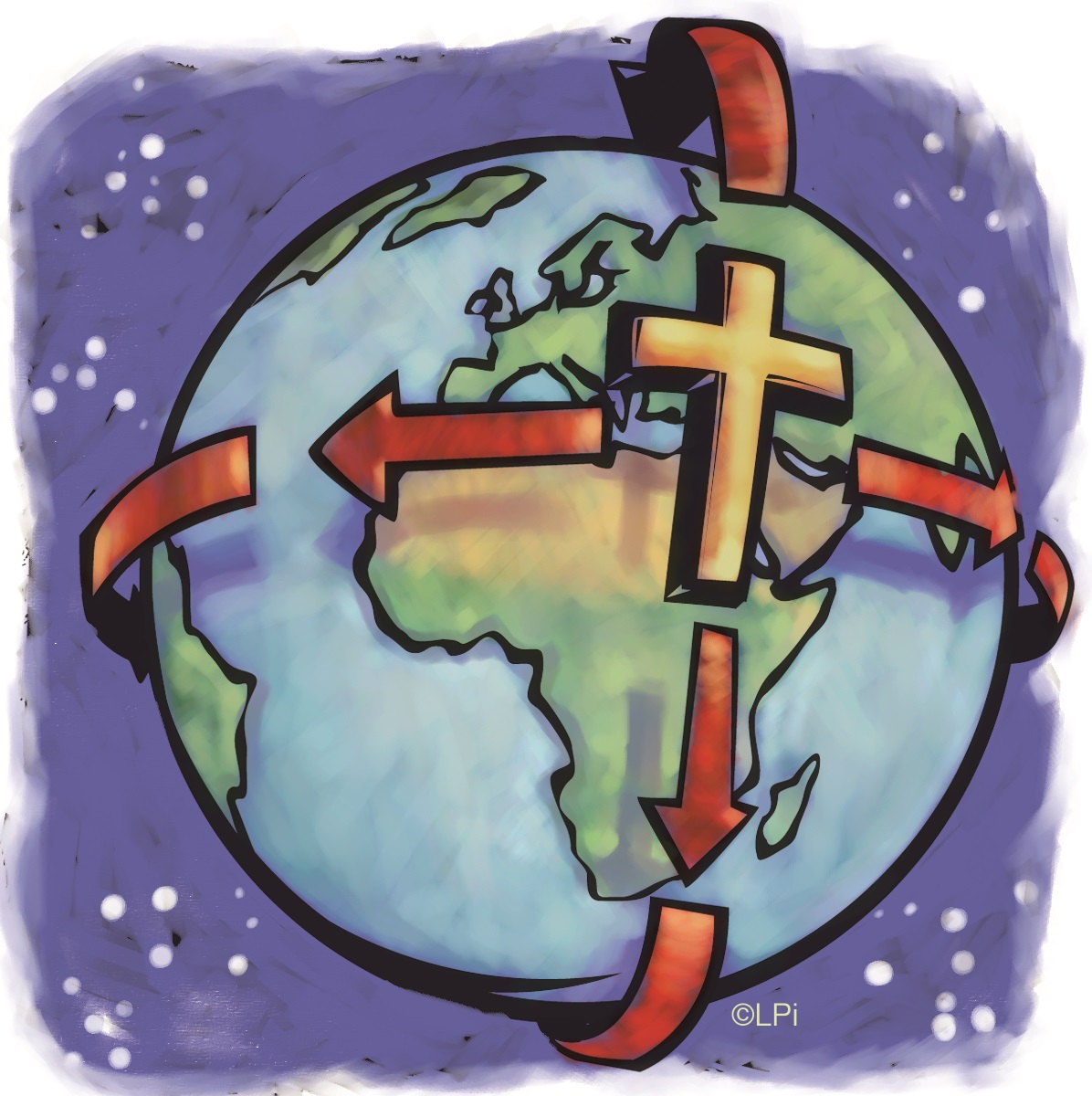
Bearing Light to the World

Today’s gospel begins with Jesus saying, “No one who lights a lamp conceals it with a vessel or sets it under a bed; rather, he places it on a lampstand
so that those who enter may see the light.”

If we buy a lamp, we do not hide it under the bed.  That would be contrary to the purpose of the lamp.  Likewise, if we have a small lamp, we don’t put it on the floor.  We put it on a lampstand to lift the light up to where it can be seen and bring light to the world.

On Sunday, the Book of the Gospels is carried in the opening procession for Mass.  It is not carried under the arm and hanging down the side of the deacon or lector carrying it.  Rather, they hold it up to be seen by all.  It contains the words of Jesus and the story of his life on the world.  Jesus is the light of the world and his word must be held up and revered.

How do you carry the Word of God in your life?  When I say “carry” I don’t literally mean how do you carry a Bible.  Although, if you do carry a Bible with you, how you carry it might say something about how you look at the Word of God.  Rather, when I refer to carrying the Word of God in your life, I am referring to how you show your faith in public.

For instance, when you are in a restaurant for a meal, do you say grace before eating?  Some people say they feel uncomfortable praying then because people are looking at them.  That is the best time to pray!  Let others see you pray.  To go a step further, I think of the people who go out for coffee or breakfast after Mass.  What do you talk about?  Do you ever talk about what your heard at church?  Again, people might fear others are listening and they don’t want to be divisive.

Our nation is showing it divisiveness more since our last election.  Notice, I put emphasis on “showing.”  I’m not sure that our nation is becoming any more divided.  We are just showing it more because people feel more free to speak up.  We need to speak up for our faith.  The world is looking darker.  I think part of this has happened as people say that we need to allow for all types of lifestyle except that we aren’t supposed to talk about faith.  They say that’s a private matter.  So what has happened since people speak less about their faith.  The world has gotten darker.

The world needs the light of Christ.

Peace,

Fr. Jeff

25th Sunday in Ordinary Time, Year A – Homily

25th Sunday in Ordinary Time, Year A
Isaiah 55:6-9
Psalm 145:2-3, 8-9, 17-18
Philippians 1:20c-24, 27a
Matthew 20:1-16a

Paul says to the Philippians, “Christ will be magnified in my body” and “Only, conduct yourselves in a way worthy of the gospel of Christ.

To do so begins with, as stated in our opening prayer, by keeping the precepts of the Lord.  Do we live according to what Jesus teaches?  This begins with keeping the Ten Commandments but not just because they are commandments.

We must live remembering what Jesus tells us the two greatest commandments are, to love God and to love our neighbor.

Loving God calls us to show our love in the way we praise God.  This can be centered in what goes on at Mass.  We all come together to praise God.  As I have said multiple times before, we count on many people to help at Mass.  We have lectors, Extraordinary Ministers of Holy Communion, altar servers, ushers, and musicians.  We are grateful for those who help us in these roles to glorify God.

But your generosity in helping our parish doesn’t end there.  Some of you help in other ways.  We are thankful for those who help with our Martha Ministry for funeral luncheons.  We are thankful for the volunteers for our rummage sale and our Rosary and Altar Society.  We are thankful for our catechists who volunteer to help with our faith formation program.  There are the people who make our festival possible.  The list could go on.  While we are thankful for those who do help, for some things, like our festival and those who count our collections as well as musicians we do need some new volunteers.

All these people “glorify the Lord by their lives.”  I use this specific phrase because it mirrors the dismissal formula that I generally use at the end of Mass, “Go in peace, glorifying the Lord by your life.”  We are to take what we receive at Mass, grace, and go out the world.

I am also aware that we have numerous parishioners who volunteers in our community from our men who lead a weekly Bible study at the Wayne County Jail to those who take Communion to the hospitals, nursing homes, and homebound.  There are numerous parishioners who volunteer with groups like Catholic Charities, Habitat for Humanity, and Laurel House.  In all these our volunteers follow Jesus’ commandment to love our neighbor.

You are also generous with your financial contributions.  We recently raised $4,000 in an emergency collection for the victims of Hurricane Harvey (with another collection coming for Hurricane Irma and potentially Hurricane Maria).

You responded last year with great generosity to our diocesan Catholic Ministries Appeal (CMA).  All this on top of your weekly giving to our regular weekly collection.

In all of this, we are “Glorifying the Lord by Our Lives.”

It is time to start our CMA for this year.  The theme for this year is what I have been talking about, “Glorifying the Lord by Our Lives.”  As we begin this year’s appeal, I am happy to be able to say our goal for this year is up just $445 (1%) while the goal for the diocese as a whole is up 3%.

So, the good news is that after you responded so generously last year, I don’t have to ask for big increases this year.  That doesn’t mean we don’t need some to contribute more.  Among last year’s donors are people who have passed away or moved, or maybe their income has changed and they can’t contribute as much.  Increases by some who can or contributions from new donors will help offset this.

Here, I want to take the opportunity to speak about our own parish finances.  Hopefully you have read our annual report that we sent out at the end of August.  In the report, we told you about the $48,000 deficit for this year.  We need to receive more in the regular collections if we are to continue our ministries as they are now.

I know nobody likes to hear the priest talk about money.  I don’t like to talk about money but it is your parish and you need to know what is going on and what our needs are.

So, I just encourage you to think prayerfully about what you contribute to the CMA and to the parish.  You will find an insert in today’s bulletin as well as large poster boards in church that talk about how your CMA contributions are used.  Please remember that if we don’t make our CMA goal, the parish has to make up the difference.  Thus, it doesn’t do us any good to decrease your CMA contribution to put it in the Sunday collection.

It is your money and you are, in the spirit of the landowner in the gospel, ‘you are free to do as you wish with your own money.’  Here is what I suggest for the average parishioners.  For the CMA, please contribute the same amount as last year (perhaps a little more if you can).

As to your contribution to our regular collection please pray about being able to contribute more.  Going back to what I wrote in the annual report, we need about $2/person more per week.  Some will not be able to do that.  Others can do more.  Please give according to your means.

Thank you for giving of your time, your talent, and your treasure so that we may all be “Glorifying the Lord by Our Lives.”


Homily – Why are We Here for Adoration?

Homily for September 2017 – Year of the Eucharist
Joshua 3:1-13
Psalm 63:2, 3-4, 7-8, 8-9
1 Corinthians 11:23-29
Matthew 26:36-46

In encouraging people to come, I have been saying that tonight would include Exposition.  We have Jesus present in the Blessed Sacrament in the Monstrance on the altar.  I said this hour would include scripture.  We just listened to readings from scripture.  We began with music and will have more.

I have also been saying our holy hours would include a talk by me on the Eucharist and here it is.  In one sense this might seem simple to do.  In another, there is so much to the Eucharist where does one begin.  After all, as Bishop Matano said in his pastoral letter, and can be found in the Catechism of the Catholic Church, the Code of Canon Law, and the documents of the Second Vatican Council, specifically Lumen Gentium,  the Eucharist is the source and summit of our Catholic faith.

In selecting a starting point I would like to look at the title I have given to tonight.  On the front cover of the program you will see the title “Why Are We Here for Adoration?”

Why are we here?

I suspect this might be the first time some of you have ever attended a holy hour with Exposition of the Blessed Sacrament.  Maybe you are just curious.  After all, we have our diocesan Year of the Eucharist going on and maybe you want to see what it is all about.

If you are thinking this way, you might think we are having these holy hours because of the Year of the Eucharist.  While the timing is related, this is something I have been thinking about since I came last year.

I’ve been thinking about it for two reasons.  First, a couple of parishioners have asked about having holy hours.  They have experienced it before and desire it again.

Secondly, my own experience with holy hours prior to coming here is somewhat extended.  I want to share my experience with you to help you understand why holy hours are important to me.

The last parish I was in had a long tradition of monthly holy hours and I was happy to keep the tradition going.  The holy hours included readings, psalms, a reflection, and quiet time.

Prior to that the other parishes I served in did not have holy hours but in seminary I attended a weekly holy hour but even that was not my first experience with holy hours.

The parish I attended almost twenty years ago had a long tradition of monthly exposition ending with a communal holy hour.  I was intrigued by the thought of sitting before Jesus in the Blessed Sacrament.  I found the holy hours “packed with prayers.”  By packed, I mean they said prayers continuously for an hour and said them quickly.  That was great for them but it wasn’t affecting me the way I expected.

I was seeking God for as our psalm response says, “My soul is thirsting for you, O Lord my God.”  There’s also the words in our opening prayer that come from the writings of St. Augustine, “our hearts are restless until they rest in you.”

I was looking for the presence of God in my life.  We have many forms of prayer.  After trying the communal holy hour, I tried some private time before the Blessed Sacrament where I could pray in a way that suited me.  Quite honestly, I sat there expecting to be “overcome with grace” but nothing seemed to happen.

When I went to seminary and found out there was the opportunity to go to a weekly hour, I found myself skeptical based on my prior experiences.  The last fifteen minutes of the hour was Evening Prayer from the Liturgy of the Hours but the first 45 minutes was mostly quiet time.  The first time or two I went, I continued expecting to be “overcome.”

I wasn’t.  I knew my soul was thirsting for God.  Jesus was right there in the Blessed Sacrament.  Why didn’t something amazing happen?

So, I went one more time.  I say to God this was my last try.  If nothing happened, I won’t go again.  I went not expecting anything.  That meant I relaxed and opened myself to God in a new way.  I let God be God.

It ended up being the best prayer experience I had in months.  I had always gone with my expectations instead of just being open to God.

We can find God in many different forms of prayers and devotion.  That’s why tonight includes readings from the Bible, music,  and a reflection.  To give us different opportunities to let God in, to be aware of God’s presence in his Word, in me as the preacher, in our music, and in the Eucharist present on the altar.

Tonight is about being in the presence of God.

We know God is present everywhere.  We also know that sometimes it is very hard to be aware of his presence in the ordinary moments of our lives.  This is nothing new.  This is why we have churches as places dedicated to the presence of God.

As Moses led the Israelites through the desert for forty years, there were no “churches.”  For them, the central point of experiencing God’s presence among them was the Ark of the Covenant.  The Ark contained the two stone tablets with the Ten Commandments inscribed on them.  The Commandments were the basis of the covenant between God and the Israelites.  The Ark was a very holy object symbolizing God’s presence.

The first reading I selected tonight symbolizes what the Ark of the Covenant meant to them.  Moses has died and the Israelites are preparing to enter the Promised Land with Joshua as their leader.

To enter they had to cross the Jordan River.  That meant crossing the water.  God gave Joshua very specific instructions how this would happen.  Priests were to lead the way carrying the Ark of the Covenant.  As soon as their feet touched the waters it ceased to flow, halting in a single heap.  This signified God’s presence and that he was the one who halted the waters.

Over time, the Israelites fell away from the practice of their faith and the Ark of the Covenant was lost.  Only God knows where it is today.

The Ark is lost but we continue to feel, as we sang in our first song, “Our foes press on from every side.”  Where do we turn to receive God’s aid and strength?

What did I say was the source and summit of our faith?

What is before us in the monstrance on the altar?

The Eucharist.

It exists in the form of bread but it is not just bread.  It is Jesus.

How can this be?  It looks like bread.  It certainly doesn’t look like a person.  From our statues, our crucifixes, and paintings, we know Jesus was a human being like us.  How could it be Jesus in the monstrance?

Not all Christians believe it is Jesus.  Those who don’t think that Catholics have corrupted the faith.  Those who are Christian but do NOT believe that Jesus is present in the Eucharist often stress the importance of the Bible.  They will tell you that you must read the Bible.

They are right about the Bible.  YOU MUST READ THE BIBLE.  It is God’s Word.  It is what we call “Salvation History,” the story of how God has been present to his people.

You have to read the Bible because it is in the Bible that we learn the bread and wine become the Body of Blood of Jesus.  Our second reading this evening comes from Paul’s first letter to the Corinthians where Paul tells them that the Eucharist is a tradition he received from Jesus.

Jesus said, “This is my body…This cup is the new covenant in my blood.”  He doesn’t refer to it as bread and wine.  We don’t know how it is changed but it is.

As we will sing in a song later (“Tantum Ergo”), “Faith declares what none dare fathom; Faith reveals what none may see.”  We cannot fathom how the bread and wine are changed into the Body and Blood of Jesus but we can believe from the Bible, not just here in Paul’s letter but also in the gospels of Matthew, Mark, and Luke as they recall what Jesus did at the Last Supper.  There’s also the Bread of Life discourse in John’s Gospel identifies himself as the Bread of Life.

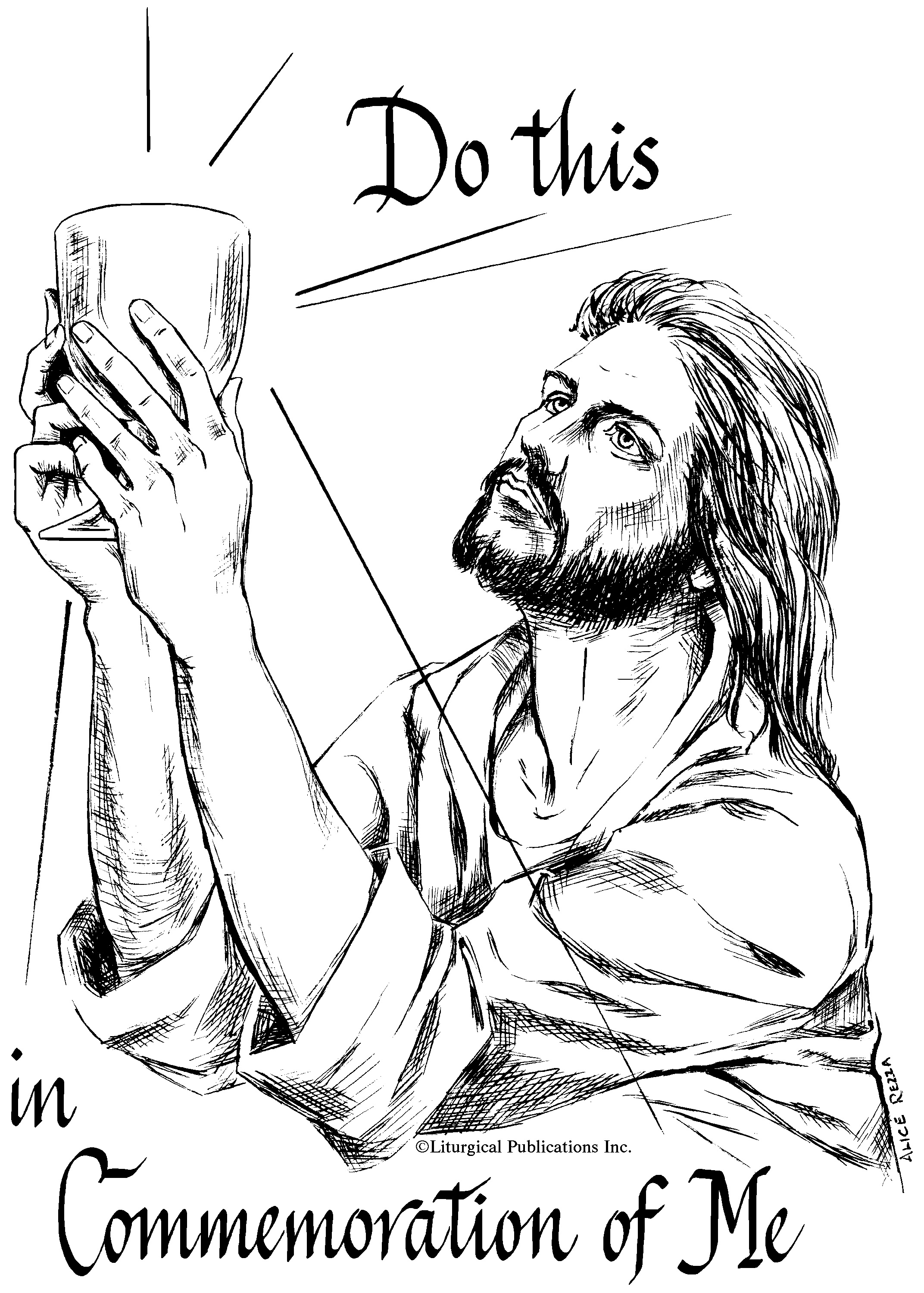
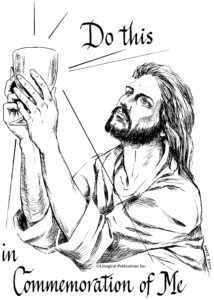
Jesus also said, “Do this in remembrance of me.”  We celebrate the Eucharist over and over because Jesus tells us to.  Remember, it’s in the Bible.  We come to pray before the Eucharist tonight because Jesus tells us it is his Body.

It is Jesus.  It is the Lord for whom our souls thirst.  It is Jesus who we are created for.  We keep watch for this one hour with Jesus.

Wow!  It is a lot to reflect on.

In a moment (but not yet) I will stop talking and allow for some quiet time.  The quiet time is intentional for each of you to be able to pray in your own way.  I could have added more that we would all do together but I didn’t.

Honestly, this is partially because I am being selfish with the quiet time.  By “selfish” I mean that I want the quiet time for myself.  Yet, I also do it realizing that we each have a favorite way of praying.  I plan to use the quiet time for myself to simply to try and be quiet to hear what God wants to say to me.

You might choose to do the same or you can choose to read over the Bible readings we heard earlier.  They are writing down for you in the program.  You might choose to pray a rosary.  You might choose to open up a hymnal to your favorite song and think about what the words mean for you.  You might think about what the Eucharist means to you. It is your choice.

Then, at about quarter of, I will invite us to all stand for our intentions.  Then, we will say the Lord’s Prayer together followed by Benediction.  The high point of that is when I will lift up the Blessed Sacrament in the monstrance and bless you, making the Sign of the Cross to which you make the Sign of the Cross as you would at Mass.

We will end with a hymn and then everyone is invited downstairs for a light reception.  At the reception I encourage you to share your experiences of tonight or the Eucharist in general and I will be there if you want to ask me questions.

For now, we quietly pray on our own.
 

24th Sunday in Ordinary Time, Year A – Homily

24th Sunday in Ordinary Time, Year A
Sirach 27:30-28:7
Psalm 103:1-2, 3-4, 9-10, 11-12
Romans 14:7-9
Matthew 18:21-35

Jesus came to offer us “forgiveness” but forgiveness wasn’t “new” with Jesus.

We see it in what Sirach writes, “Forgive you neighbor’s injustice.”  He speaks of “wrath and anger” as “hateful things yet the sinner hugs them tight.”  We must not hold onto our anger or we deny ourselves “healing from the LORD.

Today’s psalm also puts together pardon and healing.  If we refuse to forgive others, we deny the healing we need inside ourselves from the hurt.  If we hold onto our anger, we lock out love and that means not being open to God’s love.

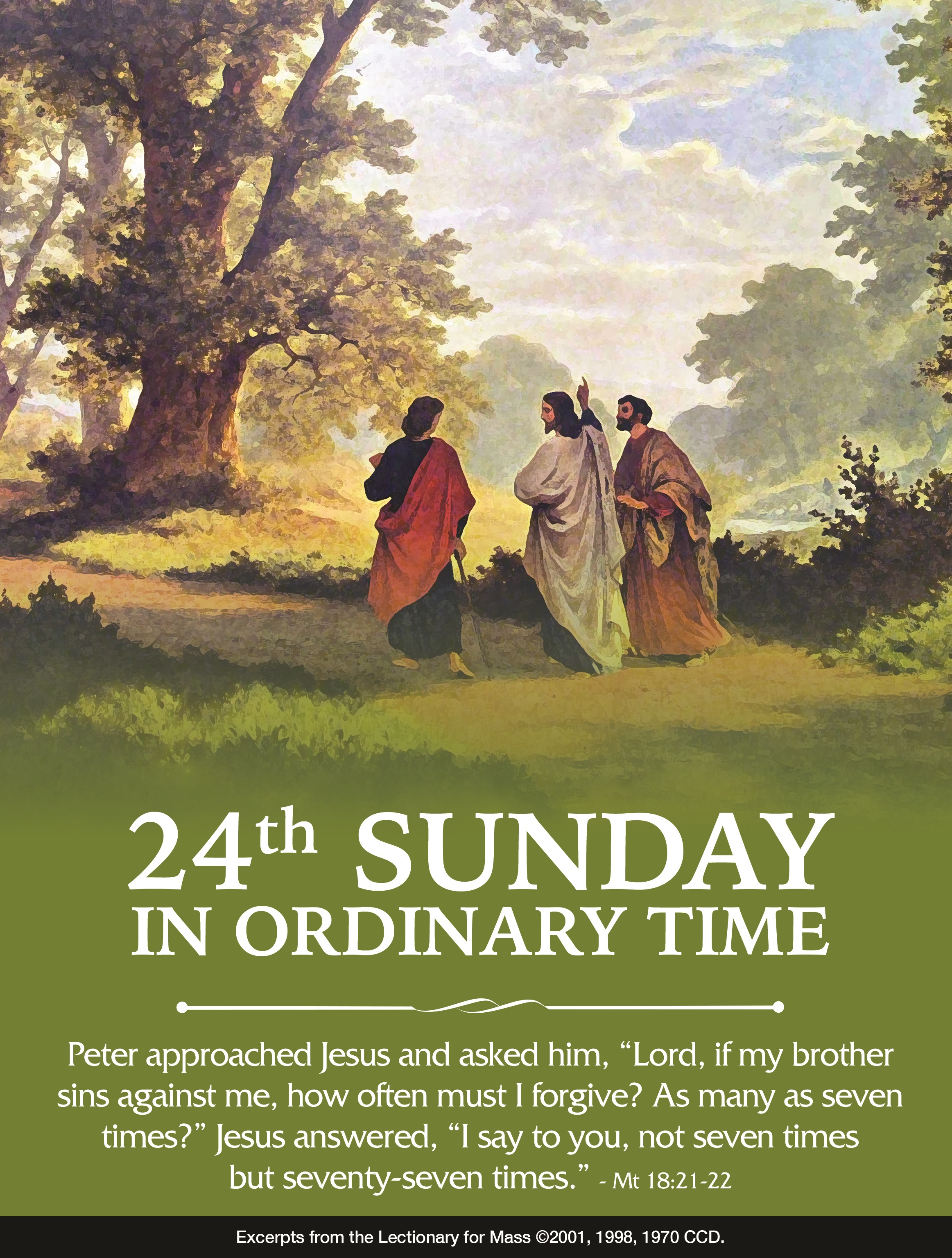
Peter knows what the scriptures taught about forgiveness.  Some read verses from the Old Testament as saying we must forgive three times.  With this in mind, Peter probably felt pretty talking about forgiving seven times.  Surely that was more than enough.  Surely Jesus would praise him but Jesus doesn’t.

Instead of praising Peter, Jesus tells him, “not seven times but seventy-seven times.”  Jesus is telling us that no matter how generous we have been with our forgiveness we need to continue to be generous in forgiving.

Why must we forgive so many times?

First, ask yourselves how many times you have needed to be forgiven by others in your lifetime.  How many times have you needed to be forgiven by God?

Secondly, we need to think about what it means to forgive.  Sometimes we think forgiveness means forgetting and remaining best friends.

I think with the little things forgiveness does include forgetting.  It just isn’t worth remember.  But what about the big things?

We hear about a lot of violence in the world in general, including in schools.  I want to go back to an incident in 2006 when a man in Pennsylvania went into an Amish school and shot several students.  A few were killed and others seriously wounded.  I refer to this incident not for the details of the shooting itself but what followed, forgiveness.

A few years ago I read the book, Amish Grace: How Forgiveness Transcended Tragedy.  You can read the book to find out more about the shooting but more important as a lesson in forgiveness.

The preface states, “Whereas in forgiveness the victim forgoes the right to vengeance, pardon releases an offender from punishment altogether… Reconciliation is the restoration of a relationship.”  (xiv)

I think when we think about God’s forgiveness we put all three, forgiveness, pardon, and reconciliation, together because if we confess our sins in the Sacrament of Reconciliation that is what God does for us.  He forgives, pardons, and reconciles.

The Amish are very good at forgiven.  They don’t hold onto grudges but they do believe in consequences.  While they believe in consequences, they do not let this lead them to seek revenge (77).

The book provides the following quote from philosopher Joanna North, “When unjustly hurt by another, we forgive when we overcome the resentment toward the offender, not by denying our right to the resentment, but instead by trying to offer the wrongdoer compassion, benevolence, and love” (126).

We can choose to hold onto our anger or we can choose to offer mercy.  Holding onto the anger accomplishes nothing.  Mercy is our Christian response.  We might have good reason to be angry, just like God has good reason to be anger with us for our sins.

It’s that time of year when our faith formation programs start up.  Just this week our middle and high school youth groups had their first meetings.  Today our K-5 students gather for the first time.  At our 10:30 Mass we will offer a special blessing for our parishioners who volunteer as catechists.  Today is called “Catechetical Sunday” by our conference of Bishops.  Each year they pick a theme.  This year’s theme is “Living as Missionary Disciples.”

To live as missionary disciples includes showing mercy to the world.  It means telling people about God’s mercy but it also means that we need to show mercy ourselves to those who have wronged us.  It doesn’t mean we forget the hurt but it does mean we don’t let it control us.

There is a key element in forgiveness.  We cannot let the sinful act continue to control us.

As we talk about God’s forgiveness, we need to show our own need to his mercy.  We need to show that we believe that God wants to forgive us.  He does!  Why else would Jesus have died on the Cross for us?

If we want to admit our need for God’s mercy, we do so by confessing our sins, seeking his forgiveness.  I just went to confession myself a couple of days ago.  Some of you are old enough to remember when people went to confession weekly.  The pendulum has swung and I can get pretty lonely in the confessional sometimes.

What changed?

It started with a better understanding of sin and grace but the pendulum went from thinking we must have done something wrong to seeing little as sin.

Others say that they confess directly to God.  God does listen but there is something therapeutic about saying our sins out loud to the priest.  There is grace that we receive when we admit our sins.  It can be anguishing for us to hide our sins inside.  Offering them to God can be a great release with God’s grace.  We need to forgive others and we need to be forgiven.

The Exaltation of the Holy Cross

Today, September 14th, we celebrate the feast of the Exaltation of the Holy Cross.  It is a feast, like every saint memorial or feast, that we celebrate every year but yet it is different.  Logistically, because of the importance of what this feast is about and unlike most other feasts, if it falls on a Sunday it takes precedence over the Sunday.  The feast of a saint is about the saint and how they served God.  This feast is about the very moment of our salvation.

To understand its importance one might begin by asking the question what is the one thing that God could not do for us as God in his divinity?  God is eternal and will never die.  So, “Christ Jesus, though he was in the form of God, did not regard equality with God something to be grasped.  Rather, he emptied himself, …coming in human likeness,…he humbled himself, becoming obedient to death, even death on a cross.”  (quote from today’s second reading)

Crucifixion was considered the most humiliating form of execution and used only for the worst of criminals.  Yet, Jesus accepted this for usBecause of this, God greatly exalted him.

The Cross is the instrument upon which Jesus did this.  We do not worship the Cross itself.  We worship Jesus but we venerate the Cross as the instrument that Jesus choose for our salvation.

Here we should think about why, as Catholics, we use a Crucifix rather than a Cross without the Body of Christ on it.  My limited understanding of Protestant theology says that they use a Cross rather than a Crucifix to say that Jesus is no longer on the Cross.  He has been set free from the Cross and lifted up.  He was first lifted up on the Cross for our salvation and for his obedience to the Father, has now be lifted up to Heaven.

As Catholics, we recognize that Jesus is not bound to the Cross but we use a Crucifix with the image of Jesus on it to always remind us that it is Jesus that saves us.  We hold the Cross in the highest regard.  We see the Cross and we see God’s love.  We see hope.

Peace,

Fr. Jeff

23rd Sunday in Ordinary Time, Year A – Homily

23rd Sunday in Ordinary Time, Year A
Ezekiel 33:7-9
Psalm 95:1-2, 6-7, 8-9
Romans 13:8-10
Matthew 18:15-20

Today Jesus gives us guidance on how to respond if someone against us.  It begins, as it should to avoid making a mountain out of a mole hill, by speaking with the person one-on-one.  We need to realize that maybe they don’t even realize what they did was wrong or the effect it had on us.  If we point it out to them, they might immediately realize what happened and be sorry.

If they don’t, then Jesus says to bring one or two witnesses along with us.  If the sinner still doesn’t repent, then Jesus says to “tell the church.”  If they still don’t repent, “then treat him as you would a Gentile or a tax collector.”

Of course, the steps Jesus offers to us are correct but I think it is important for us to reflect on why we take these steps.  Do you bring witnesses just to prove you are right?  Do you tell the church just because you want to show that you are right?  Being right is not to be our motivation.  Neither should judgment or a desire to see the person punished be our motivation.

What should be our motivation?

Our motivation should be to help the sinner become a better person.  This should be rooted in our desire to love our neighbor.  Our motivation should be for the building up of the Kingdom of Heaven by helping others to become what Christ calls all of us to be.

Of course, the person might not like what we say that.  They may think the way they are living their life is fine.  That is their choice but we must speak up for what we believe in.  Then, the choice is theirs.

Why do I say we must speak up?

Look at what the Lord says to prophet Ezekiel, “You, son of man, I have appointed watchman for the house of Israel.”  What does a watchman do?

The watchman would be one who would watch over the city for pending danger from an enemy.  In Ezekiel’s days, cities would have appointed a watchman to watch for any coming attack by a foreign power.  What is needed in our world today is watchmen who watch for the attack of our greatest enemy, the evil one who brings sin into the world.

In our baptism we are all called to be priest, prophet, and king.  That means we need to speak up for justice and what is good.  We need to speak against evil.

This can be difficult to do.  People might respond by telling us to mind our own business.  People want to talk about their freedom of choice.  Yet, they don’t want to hear opinions different than their own.

How can anyone really of freedom of choice if they don’t know about the choices that our faith teaches?

If we talk against choices people see as part of their freedom, sometimes what we say gets labelled as “hate speech.”  It is not our motivation and must never be our motivation to hate anyone.  God loves everyone.  In his love, he wants people to make good choices.  God asks us to speak in ways that help people make good choices.  Our words must be rooted in what Jesus tells us is the second greatest commandment, to love our neighbor.

Does this mean that we need to go up and down the street pointing out every sin we see?

Earlier I referred to the Lord’s words to Ezekiel, “You, son of man, I have appointed watchman for the house of Israel.”  In the rest of that sentence the Lord said, “when you hear me say anything, you shall warn them for me.  If we ask, the Lord will help us know when to speak up.

The Lord goes on to tell Ezekiel that if He tells Ezekiel to speak up and he doesn’t, that He will hold Ezekiel responsible.  However, if Ezekiel does speak up and the person still sins, the Lord will not hold Ezekiel responsible.

Clearly a parent must teach the truth to their children.  When asked what we think, we must speak up for the truth.  As I have said at others times, silence on our part can be interpreted as agreement.  On the other hand, to brand someone as “evil” is not an act of Christian love.

May the Lord always guide to know when to speak up and what words to say so that we can be a voice for Jesus and so that our lives show that we hate the sin but love the sinner.


God’s Presence

Today’s Gospel for Mass comes from Luke 4:38-44.  It has just seven verses and is set near the very beginning of Jesus’ ministry but it contains much of what we see throughout Jesus’ ministry.

We hear how the crowds bring people to Jesus as they intercede for them.  In response Jesus heals the people.  Jesus drives out many demons who know he is the Son of God and he does not allow them to speak.  Jesus says that he “must proclaim the good news of the Kingdom of God, because for this purpose I have been sent.”

Throughout the gospels Jesus heals people, he drives out demons, and he preaches.  It is the last that he proclaims as the purpose for which he has been sent.

I have said before and will say it again that it is wonderful that Jesus performs physical miracles of curing people but he does not do miracles simply for the physical healing.  Jesus comes to proclaim the good news so that we know that God loves us and is with us.  The miracles that Jesus performs shows that he is Son of God and that the power of God is at work in him.

In ten years of priesthood I could not count how many people I have anointed.  Some were near the point of death so I offered the prayers for the dying along with the Sacrament of the Anointing of the Sick.  They passed and we pray they have been welcomed into eternal life.  I have also anointed many that sought healing.  In not a single one of them have I seen an instantaneous miraculous healing.  That does not mean the sacrament didn’t work.  Some have told me of how the pain they were experiencing was eased.  Several have described receiving a sense of peace.  To me this is God’s presence in the moment.

Just this past weekend, I had two different people approach me after Mass to ask for prayer.  As they described their physical ailments, I offered them the anointing.  As I did I saw something in their face that said they knew God’s presence in the moment.  That is what the grace of the sacrament makes us aware of.  God is always present with us.  The Sacraments are moments of specific awareness.

When we face a serious illness and seek the Sacrament of the Anointing of the Sick, we are very much aware of our need for God.  When we go to the Sacrament of Reconciliation, we do so because we are very much aware that we are in need of God’s forgiveness.  Our awareness opens us to that which we seek.

God also offers us grace every time we come to Mass to celebrate the Eucharist.  Do we embrace the grace or do we become used to receiving it and take it for granted?

God is with you.

Peace,

Fr. Jeff

22nd Sunday in Ordinary Time, Year A – Homily

22nd Sunday in Ordinary Time, Year A
Jeremiah 20:7-9
Psalm 63:2, 3-4, 5-6, 8-9
Romans 12:1-2
Matthew 16:21-27

Last week Peter responded to Jesus’ question, “But who do you say that I am?” with “You are the Christ, the Son of the Living God.”  For this Jesus identifies Peter as “blessed”, pronounces him as the “rock” upon which he will build his church, and gives him “the keys to the Kingdom of Heaven.”

Peter was looking pretty good.

That was last week.  This week, our gospel picks up right where we left off last week.  Jesus now tells them for the first time about his coming passion.  He tells them that “he must go to Jerusalem and suffer greatly from the elders, the chief priests, and the scribes, and be killed and on the third day be raised.

Now Jesus saying he “must go to Jerusalem” would made sense to Peter but suffer?  Be killed?  It couldn’t be.  Jesus is the Christ.  He is supposed to be the one to set them free from their enemies.  How could he be killed by the elders and the scribes?  The Romans were the ones seen as the enemies.

So, most of what Jesus says makes no sense to Peter.  Peter, who had just called Jesus the Christ rebukes him.  Jesus then says to Peter, “Get behind me, Satan!  You are an obstacle to me.

Ouch!  Peter goes from being “blessed” and the “rock” to being called “Satan” and an “obstacle” in a few sentences.

Why?

Jesus gives the answer.  Peter is “thinking not as God does, but as human beings do.”  Peter was waiting for the Messiah, the Christ.  His soul was thirsting to know our Lord but he had his expectations of what the Messiah would be like.  When Jesus tells us of his coming passion, it doesn’t find what Peter was expecting.

People often think that if they believe in Jesus and come to church everything should be fine.  Perhaps Jeremiah thought this way when he agreed to be a prophet.  Jeremiah now feels “duped” because he has become “an object of laughter.” He said, “The word of the Lord has brought me derision and reproach all the day” so much so that he wants to give up being a prophet but he can’t.

We might often think of church as a place we go to flee from our problems.  Coming to church can be a powerful help in the problems we face but being Christian can be a challenge.

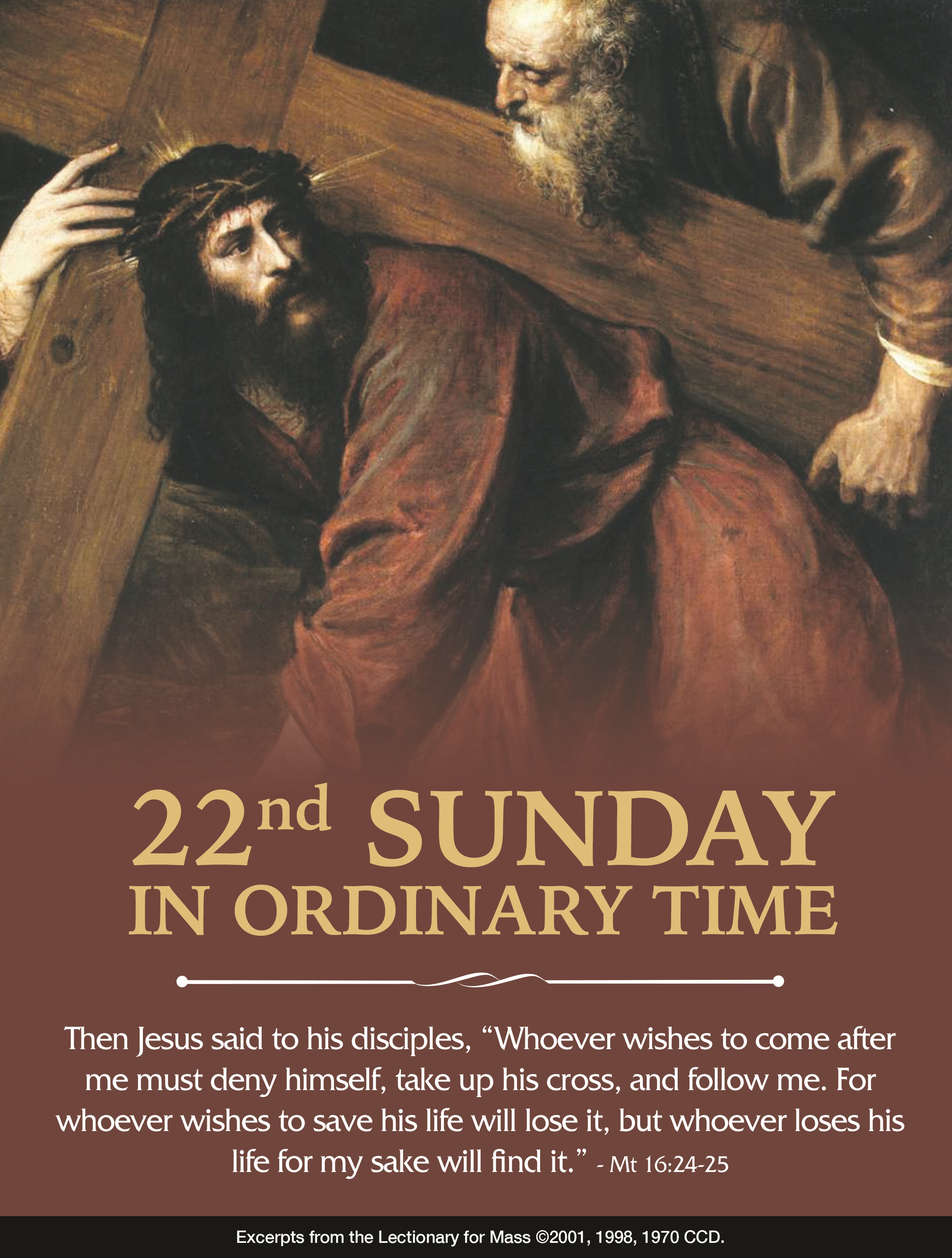
Knowing this, Jesus goes on to say “Whoever wishes to come after me must deny himself, take up his cross, and follow me.

Deny himself” and “take up his cross” are hardly words that we might put on a billboard to invite people to come to church but they are essential to understanding what it means to be Christian.

Peter was very open to Jesus as the Christ as he saw the role of the Christ but he wasn’t ready for Jesus to be the Christ that God willed.  He would need time and grace for that.

When we face suffering in our lives, we might rush to ask Jesus to fix that suffering.  Are we open to him “fixing” the suffering in the way he wants or just the way we want?  Going a step beyond that do we want Jesus to change just one part of our life that we don’t like or are we willing to let him change our whole life?

I can’t stress the “whole” in life enough.  Are we willing to let Jesus change the way we look at things?

I have spoken before of how, in his pastoral letter for our Year of the Eucharist, Bishop Matano wrote about the importance of regular attendance at Sunday Mass.  What are you looking for when you come to Mass?

Are you looking just to “feel good”?  Now wanting to “feel good” is not a bad thing as long as it isn’t just a superficial feeling but rooted in how our soul thirsts for God.

The purpose of Mass is not to simply make us “feel good.”  The first purpose of Mass is to praise God.  This means we need to live with an attitude of gratitude in seeing the blessings that God has given us.”

Mass should also help us as Christians but not just to feel good for the time we are here.  We are not at a music concert where we look for music that makes us happy or want to dance or wave our hands around.  We need a Mass with a reverence that draws us into a deeper relationship with Jesus.

Likewise we don’t select readings from the Bible for Mass that are simply meant to feel good about what we do in our own lives.  The readings, and hopefully what I preach if I listen to the Spirit, are designed to help us become better Christians.  If we do that, we will not feel just “good” but “joyful” for longer than just the time we are at Mass.

In thinking about what we are looking for out of Mass and life in general, I want to end with some of the words Paul wrote the Romans, “Do not conform yourselves to this age but be transformed by the renewal of your mind, that you may discern what is the will of God.


20th Sunday in Ordinary Time, Year A – Homily

20th Sunday in Ordinary Time, Year A
Isaiah 56:1, 6-7
Psalm 67:2-3, 5, 6, 8
Romans 11:13-15, 29-32
Matthew 15:21-28

Jesus moved on to the region of Tyre and Sidon.  This might have seemed surprising to the Jews.  Tyre and Sidon was considered pagan territory and thus unclean by the Jews.  It is there that Jesus encountered a Canaanite woman.

At first Jesus “did not say a word” when the woman first called out to him.  While it might seem surprising to us that Jesus ignored her, the Jews would have expected this.  No good Jew would talk to a Canaanite or a woman who was alone.

She persisted in calling out to him so his disciples asked him to “send her away.”  Jesus replied, “I was sent only to the lost sheep of the house of Israel.”  The Jews were a chosen people.  They saw themselves as an exclusive people.  As they saw it, salvation was meant only for them.  Jesus’ reply would seem to affirm this.

However, the woman remained persistent.  She “did Jesus homage,” called him Lord, and asked for help.  Jesus’ response would seem to refer to her as a dog, a very derogatory term.

Still she persisted.  Now Jesus responds, “O woman, great is your faith! . . . And the woman’s daughter was healed from that hour.

The Jews were indeed a chosen people.  However, salvation was not meant just for the Jews but for all who believe in the one true God.  The woman showed a great faith and Jesus did a miracle.  Jesus offered the gospel first to the Jews as a chosen people but once they refuse, the risen Jesus sent out the disciples out to baptize all nations.

Up to now, I have referred to “Jews” as a collective group who all believed exactly what I said about being a chosen and exclusive people.  However, probably not all the Jews thought that way.

You see, the idea that salvation was not just for the Jews but for all was not a new idea from Jesus.  Yes, it took on new life with Jesus but it was not a new idea.

Just look at what we hear from Isaiah today.  He refers to “The foreigners who join themselves to the Lord. . . all who keep the Sabbath free.”  He ended with “my house shall be called a house of prayer for all peoples.”  Likewise our psalm refers to “all” several times.

Salvation is clearly meant for all people.  We think we should all get this today but we don’t.  We still have white nationalists protesting.  People are still being treated differently based on race, ethnicity, faith, and disabilities.

Jesus offers salvation to every single person.  Every human being is a child of GodWe see in our church here people are Hispanic, largely from Puerto Rico and Honduras but other Latin American countries as well.  We have Black (colored/Afro-American) people.  We have people from the Philippines.

The last parish I was in was Ithaca, an even more diverse congregation.  The parish literally had people as members had been born on six of the seven continents.  I would say it was only six because I don’t think anyone has ever been born in Antarctica.

Salvation is offered to all people.  That doesn’t mean everyone gets into Heaven.  To get into Heaven, each person must accept the truth of our faith.  To help them do so, we need to

  1. Show them love.  This means we must treat all with dignity and respect.
  2. Offer them the truth. This means telling them what we know about our faith and how Jesus calls us to live.  We may not know everything our faith teaches but we can tell them what we do know, that Jesus loves them.
  3. When we see people treated badly, we can speak against what is going on. Silence is often interrupted as agreement.  When we see racist rallies, are we willing to say we disagree?

Salvation is offered to all.  May we have the courage to live what we believe.


A Voice Crying Out in the Desert

Last week it was the situation in North Korea that was the headlines on the news.  Then came the white nationalist activity in Charlottesville, VA.  Yesterday brought a car driving through a crowd of people in Barcelona Spain.  Today (August 18th) there has been a stabbing in Turku Finland with two dad and six wounded.

What is it going to take to change all this?

Here I think of the ministry of John the Baptist as told in Matthew 3:1-3

In those days John the Baptist appeared, preaching in the desert of Judea [and] saying, “Repent, for the kingdom of heaven is at hand!”  It was of him that the prophet Isaiah had spoken when he said: “A voice of one crying out in the desert, ‘Prepare the way of the Lord, make straight his paths.’”

Fighting does little to solve problems.  What is needed is a voice of reason and truth to be that voice of “one crying out in the desert.”  There are too many people who are “hotheads.”  Trading jabs and threats doesn’t help.  We need to speak up for what our faith teaches.

We live in a world of diversity.  People come from different races and geography.  People hold different beliefs.  Trying to live in a pluralistic society with so many different beliefs, relativism is becoming the popular approach.  Relativism says you can believe whatever you want as long as no one gets hurt.  This leads to many people being silent on many issues.

The problem is that silence is often interrupted as either agreement or you don’t care.  If we want the world to change for the better, we must be willing to step out and be the voice of reason and God’s Truth.  At our Baptism, we are anointed as priest, prophet, and king.  Some are called to be prophets like John the Baptist but not all but we can all work to “prepare the way of the Lord.

“Preparing the way of the Lord” begins with telling people about Jesus and his love.  To tell them that Jesus died for our sins.  We can all do that much.  We can also pray for our bishops to be a voice for peace and for the dignity of all live.

I strive to help people know the Lord in the words I preach, offer in my presentations, or here on my blog.  I also take seriously my responsibility as a priest in the Sacrament of Reconciliation to help people know God’s forgiveness.  I try to speak when prompted by the spirit to issues in our world ranging from the situation in North Korea that I spoke about in my homily last Sunday to the issue of physician assisted suicide.  I’m sure there is more I need to speak of in the homily and here on my blog.  Pray that I always offer the words that the Holy Spirit calls me to speak.

Do you remain silent or do you offer the love of Christ to the world? You may not know or understand all church teaching but are you willing to say there is a right way and a wrong way and that God is the one that decides what is right and just?

Peace,

Fr. Jeff